

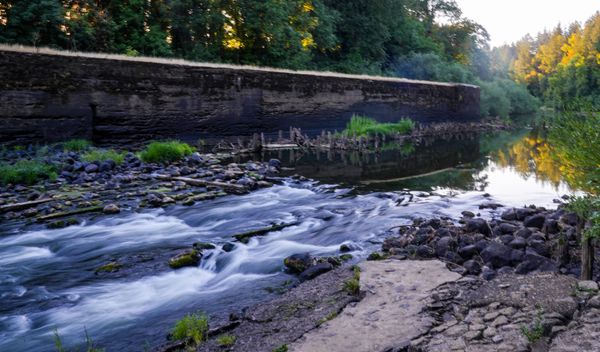
LAFAYETTE, Ore. — Those who even know of or have visited Lafayette Locks County Park may not know its intriguing origin story - one that took 40 years of political fighting to build and less than a decade to become useless.
Locals had pushed for a lock since at least 1858 when the Oregon Argus argued Yamhill County needed one for year-round river travel. Steamboat owner Christopher Switzer tried to organize one in 1859. Three more companies attempted it between 1869 and 1876. One actually built a dam near the river's mouth, but it washed out in a flood two years later. As you'll see, maybe that should've been the sign that it just wasn't meant to be.
The federal government studied the idea of a lock in 1892, and its own engineer recommended AGAINST building it, arguing the roads and railroads already served the area well enough. Congress funded it anyway. Political pressure from local boosters, Congressman Binger Hermann and the editor of the Morning Oregonian kept the project moving, and by 1897 enough money had been appropriated to start construction.
Building the lock took from 1898-1900, slowed by floods, a lawsuit over a cement shipment and a steamboat that struck the unfinished structure one night. Again, signs that maybe this wasn't destined for greatness.
It finally opened September 21, 1900, and steamboats could run to McMinnville year-round. At least in theory.
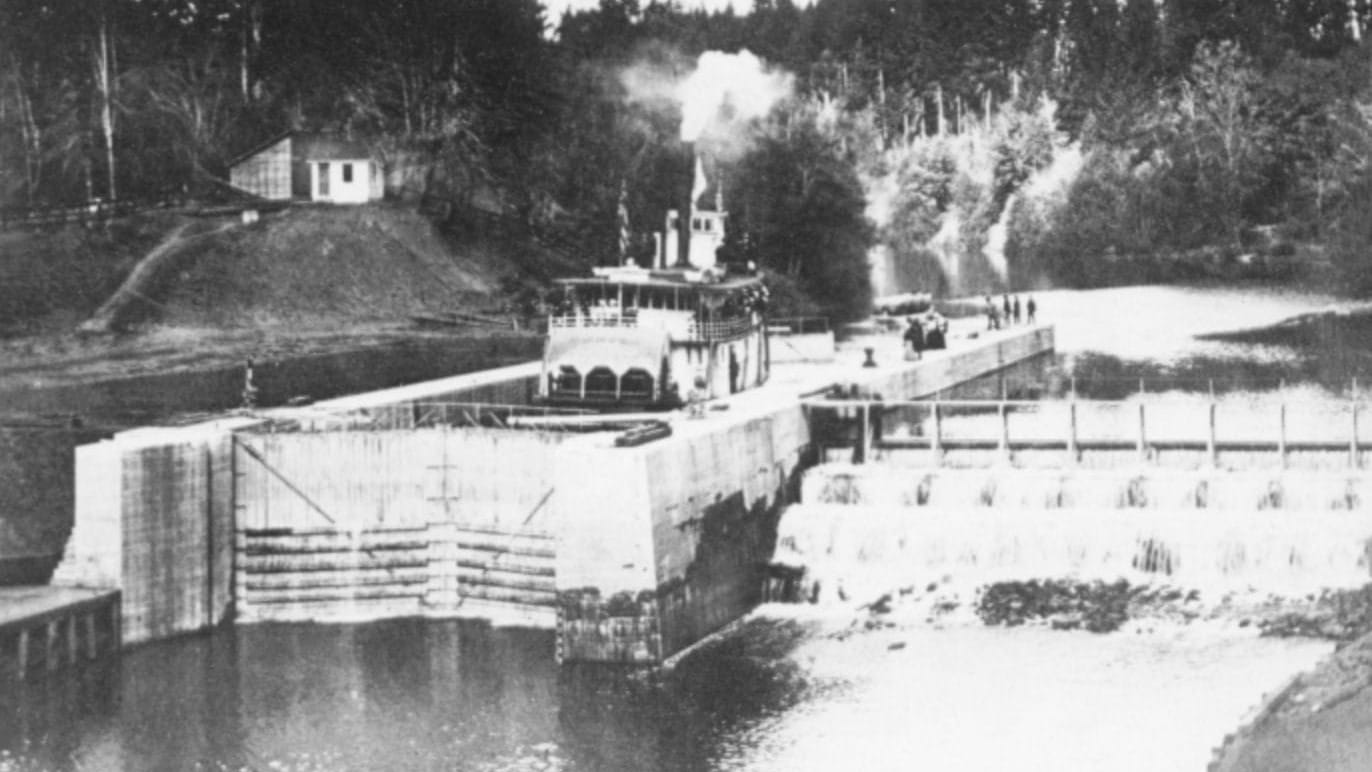
The design had one flaw nobody had planned around: The lock only worked at low water. When the river rose high enough that boats actually needed help getting through, the whole structure flooded and shut down. Steamboat companies stopped using it within two years, and by the mid-1920s the lock keeper's main job was opening the gates once a week just to prove they still worked.